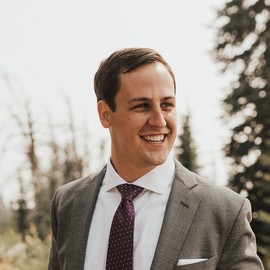
Paul A. Parker
Assistant Professor
Department of Statistics
University of California, Santa Cruz
Biography
I am currently an assistant professor in the Department of Statistics at the University of California, Santa Cruz. Before this role, I obtained my Ph.D. in Statistics at the University of Missouri, where I was a recipient of the U.S. Census Bureau Dissertation Fellowship, and a recipient of the University of Missouri Population, Education and Health Center Interdisciplinary Doctoral Fellowship. My dissertation work was focused on Bayesian methods for modeling non-Gaussian unit-level survey data under informative sampling, with an emphasis on application to small area estimation. I am broadly interested in modeling dependent data (spatial, temporal, functional, etc.) for a variety of applications including official statistics, social sciences, and environmental sciences. I am also interested in integration of modern machine learning and data science techniques to help improve statistical models.
Interests
- Bayesian Methods
- Official Statistics and Survey Methods
- Dependent Data (Spatial, Time Series, Functional Data, etc.)
- Business and Government Applications
- Deep Learning
- Data Science
Education
Ph.D. in Statistics, 2021
University of Missouri
M.A. in Statistics, 2018
University of Missouri
B.S. in Applied Mathematics, 2014
University of Idaho